
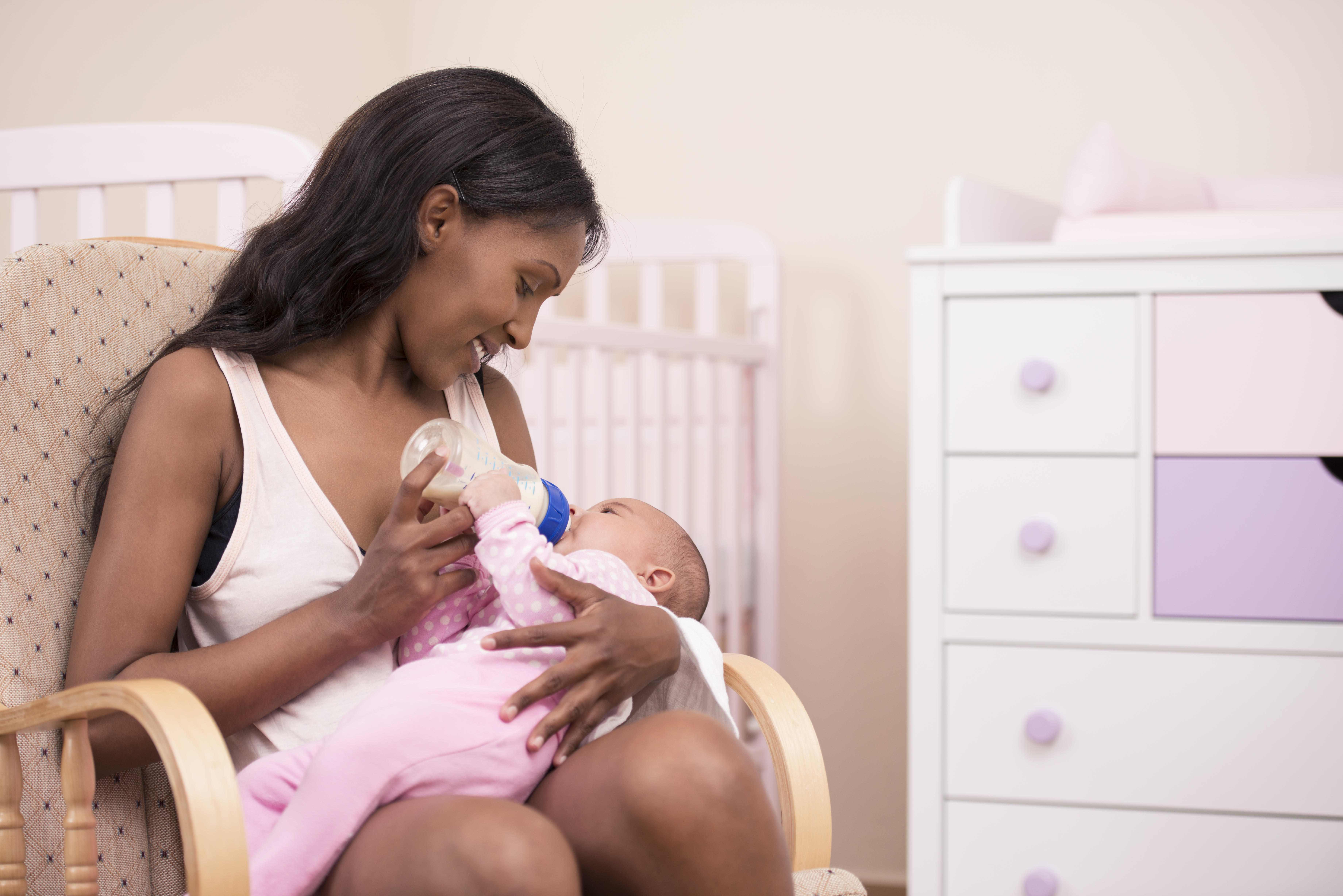
Your body reacts instantly. Your chest tightens. Your mind races.
You check everything.
You hold them.
You wonder if you’re missing something.
First, I want you to hear this clearly:
Crying is your baby’s language. Not your failure.
According to the American Academy of Pediatrics, crying is a normal and necessary way babies communicate their needs, especially in the first few months of life.
You are not doing anything wrong.
You are learning each other.
The first step: check the basics
Most crying happens for simple, fixable reasons.
Check these first:
-
Hunger
-
Dirty diaper
-
Gas
-
Temperature (too hot or cold)
-
Overtiredness
Newborns especially need frequent feeding. Their stomach is tiny and empties quickly.
The most powerful thing you can do: hold your baby 🤍
Research from Harvard’s Center on the Developing Child shows that physical contact helps regulate a baby’s nervous system.
This is called co-regulation.
Your heartbeat, warmth, and presence tell their body:
You are safe.
This alone can calm crying faster than anything else.
You are not “spoiling” them.
You are stabilizing them.
Swaddling can help babies feel secure


 Swaddling recreates the snug feeling of the womb.
Research published in Pediatrics found swaddling can help reduce crying and improve sleep in young infants.
A soft, breathable blanket can help your baby feel contained and comforted.
It becomes more than just warmth.
It becomes familiarity.
Safety.
Gentle soothing methods that work
These research-backed techniques are simple and effective:
1. Rocking
Slow, gentle rocking mimics movement from pregnancy.
2. Skin-to-skin contact
The World Health Organization recommends skin-to-skin contact to reduce infant stress and crying.
3. Feeding
Sometimes babies cry simply because they are hungry or need comfort feeding.
4. Soft sounds
White noise mimics the sounds they heard in the womb.
5. Changing environment
Sometimes babies just need a reset — a different room, fresh air, or change in position.
Sometimes babies cry even when you’ve done everything right
This is the hardest truth.
Sometimes babies cry because their nervous system is still developing.
This does not mean you’ve failed.
It means they are human.
And you are exactly who they need.
A gentle reminder for your heart 🤍
Your baby is not crying because you are doing something wrong.
They are crying because you are their safe place.
And even when it doesn’t stop right away, your presence is helping more than you know.
You are their calm in a world that is brand new.
Research sources
-
American Academy of Pediatrics — Infant crying and communication
-
Harvard Center on the Developing Child — Co-regulation
-
World Health Organization — Skin-to-skin benefits
-
Pediatrics Journal — Swaddling and infant soothing